

Collagenase Chromophore-Substrate Component A 10 mg | >95%
AdipoGen Life Sciences

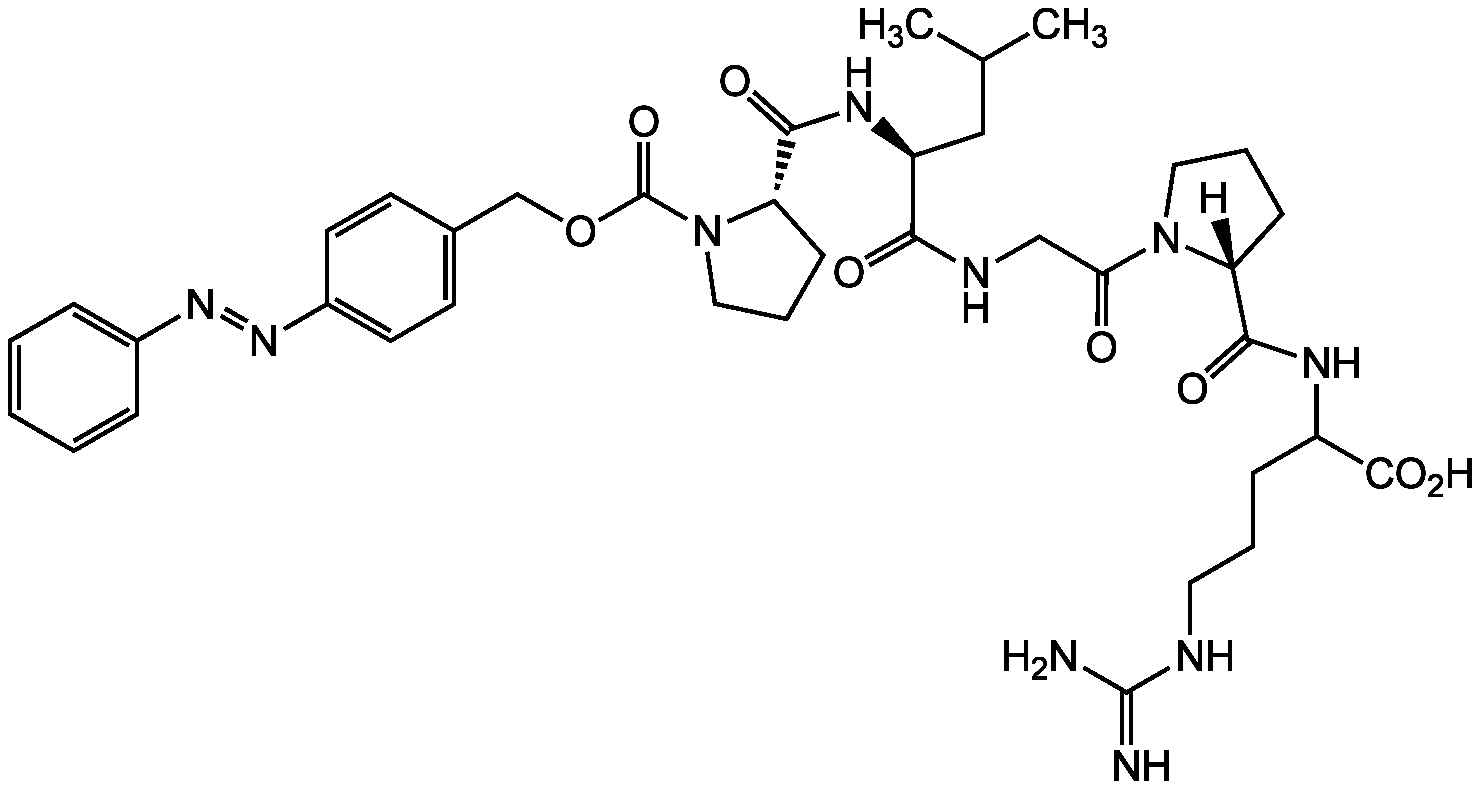
Collagenase Chromophore-Substrate Component A
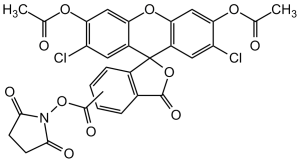
5-(and-6)-Carboxy-2′,7′-dichlorofluorescein diacetate, succinimidyl ester is a useful fluorescent tracer that can passively diffuse into cells and covalently label intracellular proteins, resulting in long-term cell labeling. The reagent itself is colorless and nonfluorescent but becomes brightly green fluorescent once it is hydrolyzed by intracellular esterases.
More Information Supplier Page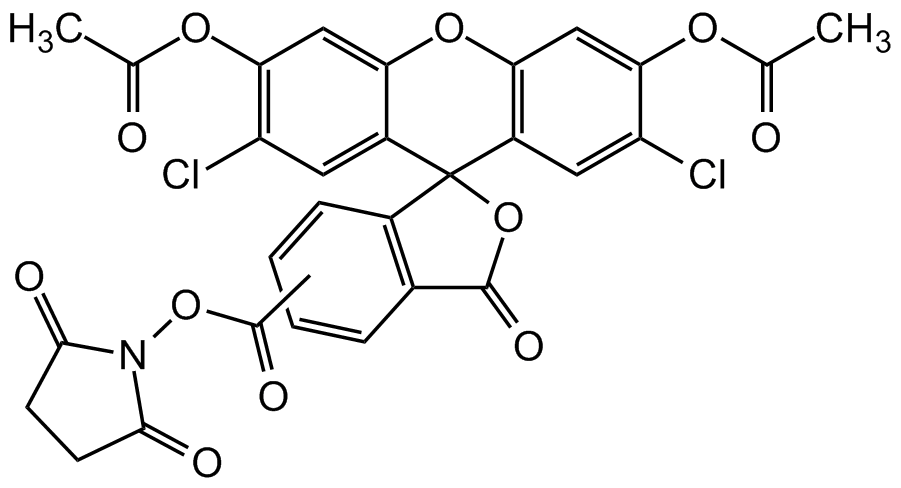
5-(and-6)-Carboxy-2′,7′-dichlorofluorescein diacetate, succinimidyl ester is a useful fluorescent tracer that can passively diffuse into cells and covalently label intracellular proteins, resulting in long-term cell labeling. The reagent itself is colorless and nonfluorescent but becomes brightly green fluorescent once it is hydrolyzed by intracellular esterases.
More Information Supplier Page 
Used to differentiate viable cells from apoptotic cells. Live cells that are not apoptotic accumulate 6-carboxyfluorescein but do not accumulate annexin. CFDA enter cells and are hydrolysed more slowly than FDA. CFDA and FDA hydrolyses obey Michaelis-Menten kinetics with Km values of around 19 and 2 microM, respectively.
More Information Supplier Page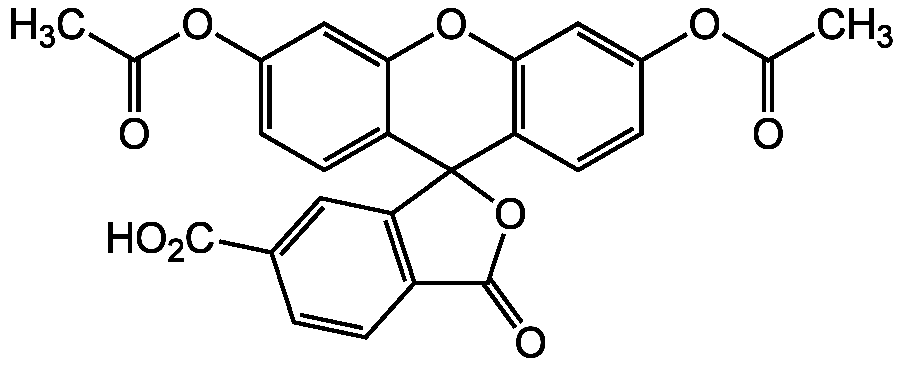
Used to differentiate viable cells from apoptotic cells. Live cells that are not apoptotic accumulate 6-carboxyfluorescein but do not accumulate annexin. CFDA enter cells and are hydrolysed more slowly than FDA. CFDA and FDA hydrolyses obey Michaelis-Menten kinetics with Km values of around 19 and 2 microM, respectively.
More Information Supplier Page 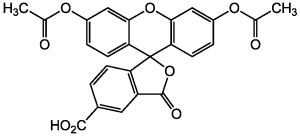
Carboxyfluorescein diacetate (CFDA), which was originally used to measure intracellular pH but was soon adapted for use as a cell viability indicator. Upon hydrolysis by intracellular nonspecific esterases, CFDA forms carboxyfluorescein. As compared with fluorescein, carboxyfluorescein contains extra negative charges and is therefore better retained in cells CFDA is moderately permeant to most cell membranes, […]
More Information Supplier Page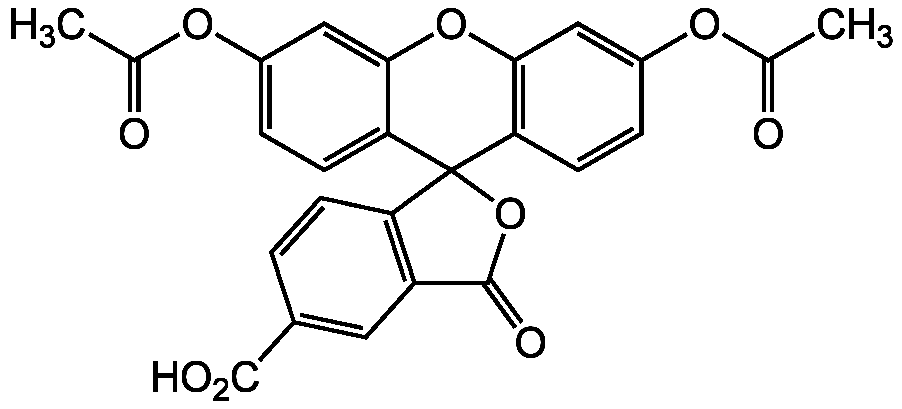
Carboxyfluorescein diacetate (CFDA), which was originally used to measure intracellular pH but was soon adapted for use as a cell viability indicator. Upon hydrolysis by intracellular nonspecific esterases, CFDA forms carboxyfluorescein. As compared with fluorescein, carboxyfluorescein contains extra negative charges and is therefore better retained in cells CFDA is moderately permeant to most cell membranes, […]
More Information Supplier Page Carboxyfluorescein diacetate (CFDA), which was originally used to measure intracellular pH but was soon adapted for use as a cell viability indicator. Upon hydrolysis by intracellular nonspecific esterases, CFDA forms carboxyfluorescein. As compared with fluorescein, carboxyfluorescein contains extra negative charges and is therefore better retained in cells CFDA is moderately permeant to most cell membranes, […]
More Information Supplier Page 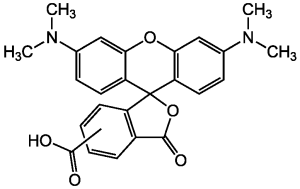
Mixed isomers of carboxytetramethylrhodamine free acid. Tetramethylrhodamine (TMR) is one of the fluorophores most often used for preparing peptide, protein, nucleotide and nucleic acid conjugates. TMR dyes have been widely used as acceptors for FAM fluorophores in a variety of FRET studies. The dye can be coupled to primary or secondary amines via standard peptide […]
More Information Supplier Page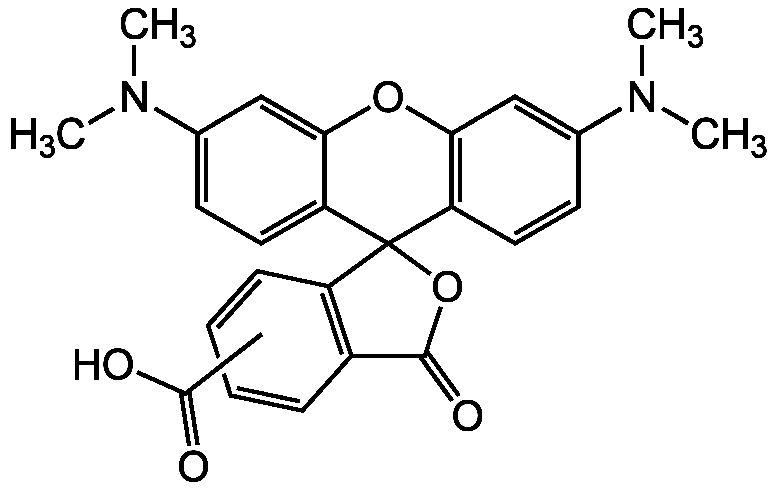
Mixed isomers of carboxytetramethylrhodamine free acid. Tetramethylrhodamine (TMR) is one of the fluorophores most often used for preparing peptide, protein, nucleotide and nucleic acid conjugates. TMR dyes have been widely used as acceptors for FAM fluorophores in a variety of FRET studies. The dye can be coupled to primary or secondary amines via standard peptide […]
More Information Supplier Page