TargetMol
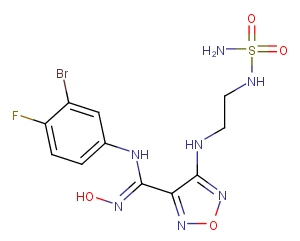
Epacadostat is an oral-available inhibitor of indoleamine 2, 3-dioxygenase (IDO1), increasing the proliferation and activation of various immune cells and reducing tumor-associated regulatory T cells.
More Information
Supplier Page
TargetMol
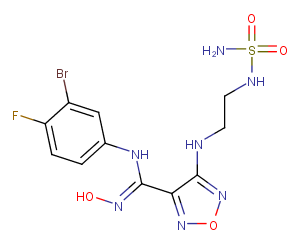
Epacadostat is an oral-available inhibitor of indoleamine 2, 3-dioxygenase (IDO1), increasing the proliferation and activation of various immune cells and reducing tumor-associated regulatory T cells.
More Information
Supplier Page
TargetMol
Epacadostat is an oral-available inhibitor of indoleamine 2, 3-dioxygenase (IDO1), increasing the proliferation and activation of various immune cells and reducing tumor-associated regulatory T cells.
More Information
Supplier Page
BTZ043
2 mg
| 99.69%
TargetMol
PLX8394
25 mg
| 100.00%
TargetMol
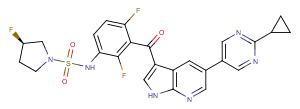
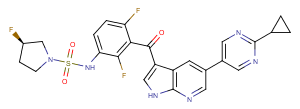
PLX8394 is an orally active inhibitor of serine/threonine-protein kinase B-Raf (BRAF) protein. PLX8394 can selectively bind to and inhibit the activity of both wild-type and mutated forms of BRAF, then inhibit the proliferation of tumor cells which express mutated forms of BRAF. PLX8394 appears to be effective against tumors that express multiple mutated forms of […]
More Information
Supplier Page
PLX8394
1 mg
| 100.00%
TargetMol
PLX8394 is an orally active inhibitor of serine/threonine-protein kinase B-Raf (BRAF) protein. PLX8394 can selectively bind to and inhibit the activity of both wild-type and mutated forms of BRAF, then inhibit the proliferation of tumor cells which express mutated forms of BRAF. PLX8394 appears to be effective against tumors that express multiple mutated forms of […]
More Information
Supplier Page
TargetMol
Y16
25 mg
| Purity Not Available
TargetMol
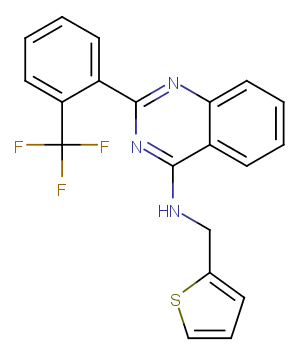
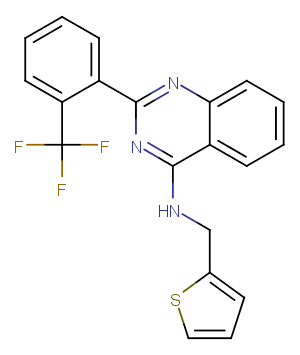
Y16 is a G-protein–coupled Rho GEFs inhibitor; works synergistically with Rhosin/G04 in inhibiting LARG-RhoA interaction, RhoA activation, and RhoA-mediated signaling functions.
More Information
Supplier Page
Y16
2 mg
| Purity Not Available
TargetMol
Y16 is a G-protein–coupled Rho GEFs inhibitor; works synergistically with Rhosin/G04 in inhibiting LARG-RhoA interaction, RhoA activation, and RhoA-mediated signaling functions.
More Information
Supplier Page
TargetMol
Salubrinal, a phosphatases (PP1) inhibitor(IC50=1.7 μM), exhibits function on the eukaryotic translation initiation factor 2 subunit (eIF2α).
More Information
Supplier Page